Announcements and E-Formations for the week of October 28, 2026

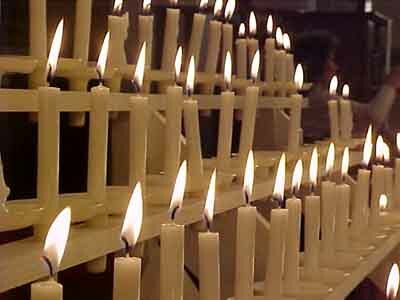
All Saints Sunday
By Pr. Lisa Rygiel
On Sunday, we will be celebrating All Saints’ Day at Zion’s Lutheran Church. All Saint’s Day has a long history that reaches back into the earliest centuries of Christianity. At its heart, it is a celebration of the whole communion of saints, known and unknown, and the hope that Christians share in Christ’s resurrection. In Western Christianity it is celebrated on November 1.
During the first centuries of Christianity, believers regularly commemorated Christians who had been killed because of their faith. Communities often gathered on the anniversary of a martyr’s death, sometimes at the martyr's grave, to remember that person's witness to Christ. By the third century, this was an established Christian practice.
As the number of martyrs grew, particularly during periods of Roman persecution, it became increasingly natural for Christians to commemorate groups of martyrs together, rather than maintain a separate celebration for every individual.
Different parts of Christianity observed such commemorations on different days. There is evidence that Christians in the East commemorated all martyrs on May 13, while other Eastern traditions developed a celebration on the Sunday after Pentecost. Eastern Orthodox churches today generally observe All Saints on the first Sunday after Pentecost rather than November 1.
The placement after Pentecost has beautiful theological symbolism: Pentecost celebrates the gift of the Holy Spirit to the Church, followed by a celebration of the people whose lives demonstrate the Spirit's transforming work. This year, the November 1 date falls on the first Sunday after Pentecost.
The November date appeared during the pontificate of Pope Gregory III (731–741). He dedicated a chapel in St. Peter's in Rome to all the saints, not simply the martyrs, with its anniversary observed on November 1. That shift is important. The celebration was becoming about more than Christians who had died as martyrs. It came to embrace all the saints.
By the ninth century November 1 was being observed in several parts of Western Christianity, and in 837 Pope Gregory IV ordered its general observance.
In medieval England, All Saints’ Day became known as All Hallows. "Hallow" simply means holy person or saint.
That explains a familiar word: All Hallows → All Hallows' Eve → Halloween
Halloween is therefore literally the eve of All Saints’ Day. In the Western Christian calendar, the sequence became:
- October 31: All Hallows’ Eve, or Halloween
- November 1: All Saints’ Day
- November 2: All Souls’ Day
Together these days form a period sometimes called All Hallowtide, centered on remembrance of the faithful departed and the Christian hope of eternal life.
Following the Reformation, All Saints’ Day continued in Roman Catholicism, but it wasn't simply abandoned by Protestants.
Anglicans and Lutherans, among others, continued to observe it, although Protestant understandings of "saints" often emphasized all believers in Christ rather than a special class of canonized Christians. That understanding has strong New Testament roots. Paul regularly calls ordinary Christians "saints," for example:
For many Protestant congregations, therefore, All Saints’ Day has become an occasion for remembering faithful Christians who have died, including members of the local congregation.
Come to church on Sunday as we remember the saints!
All Saints Sunday, Nov. 1, 2026
Announcements
- Dinner & A Movie: Next Wednesday, Oct. 28, at 5:30 p.m., Zion’s has a special event planned. We will screen the movie The Shack. We will also have dinner and discussion. Dinner will be sandwiches, salads, and desserts (and, of course, popcorn for the movie). We look forward to seeing you there, and if you can bring a food item for dinner, please let Pr. Lisa or Jo Moss know.
- Flowers: Donated by John & Charlotte Strecker-Baseler, giving thanks for everyone's loved ones: the Saints in Heaven and the Saints on Earth. Praise be the Lord!"
"Soli Deo Gloria: Glory to God alone" - Fellowship: Join us after worship Sunday for our First Sunday Potluck in the Fellowship Hall. All are welcome.
- Time to “Fall Back”: Daylight Saving Time ends on Sunday morning, Nov. 1, be sure to set your clocks back and we’ll see you at 10 a.m. (MST) for worship.
- All Saints Sunday: 1 is All Saints Sunday, and we will offer blessings for people who have passed or who have left an indelible mark on our lives. You are invited to bring a photo or memento of those individuals for our blessing.
- Five Loaves Volunteers Needed: This year’s October 5-Loaves deliveries correspond with Halloween, which makes our meal program a unique version of Trick-or-Treat as we will be giving instead of receiving. We need people to help with morning food deliveries on Saturday, as well as to help with preparations on Friday morning starting about 9 a.m. Several of our regular drivers are unavailable this coming weekend and your help is greatly appreciated.
- Zion’s Book Club: Our Adult Study continues at 10:30 a.m. each Tuesday in the Fellowship Hall. Our next study is on Tuesday, Nov. 3 in the Fellowship Hall as we continue our discussion of the book, “What if Jesus was Serious about Prayer”.
- We’re Getting Ready for Thanksgiving: Plans are underway to support the many tasks that are needed for our annual Community Thanksgiving Dinner. This year, we will contract the cooking and carving of turkey and ham but need help with many other food items. We need people to help prepare potatoes, gravy, sweet potatoes, green beans and pies. We need people to help on Thanksgiving Day with serving food, delivering meals, serving and clearing tables for people dining in, and cleaning up, among other tasks. If you can help, please contact Norine Hazen or Pr. Lisa. They can direct you to the people who are heading each task. If you know someone who needs meals delivered, please share that information with Jo Moss.
- We’re Here for You: For pastoral care, Pr. Lisa has office hours from 9-10:30 a.m. on Tuesdays and by appointment. Call Zion’s at 719-846-7785 or send an email to zionsluth@gmail.com.
E-Formation
On All Saints Day, we thank God for all the baptized, both the famous and the forgotten, both those who lived in the past and those around us today. Come to worship, to gather at Jesus’ feet and to receive his words of blessing.
Matthew 5:1-12
The Beatitudes are appointed for All Saints because they describe a surprising grouping of persons who find their wholeness in blessings from God, rather than in the values of this world. True happiness comes from life with God. The Beatitudes proclaim trust that God will bring about salvation, despite appearances. In true biblical fashion, God is on the side of the underdog.
Revelation 7:9-17
This magnificent poetic passage describes the worship of God (“the throne”) and Christ (“the Lamb”) in the heavenly realm. Joining with angels, church leaders, and the “four living creatures” are all believers (“robed in white”) who suffered on earth. The vision means to comfort Christians who mourn their dead and to inspire trust that God will bring joy out of sorrow.
1 John 3:1-3
The reading expresses our trust that at the end, we will see God, who loves us. As children, we will see the Father; unknown by the world, we are known by God.
Zion's Lutheran Church
zionsluth@gmail.com
719-846-7785
-
Location
Office Hours
Contact
