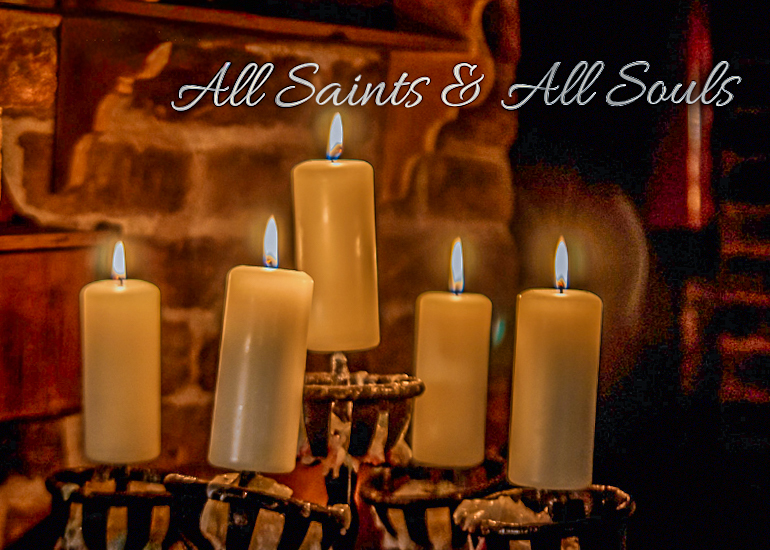
All Saints Day is Nov. 1, which also is All Saints Sunday, During worship, Zion’s plans a blessing to give thanks for everyone's loved ones: the Saints in Heaven and the Saints on Earth. People can bring a photo or memento of these individuals for the blessing.
All Saints Day (Nov. 1) and All Souls Day (Nov. 2) date to early Christian history. In an October 2020 article in Living Lutheran, Tim Brown discusses these days, noting that All Saints Day, or its early equivalents, probably was celebrated earlier in the year, perhaps on the heels of Easter. He notes that as Christianity spread to people with pre-Christian ideas, All Saints Day was scheduled directly after All Hallow’s Eve to meld with other pagan festivals in other lands, according to Brown.
In Roman Catholic, Anglican and Orthodox communities, Brown said, All Saints Day is reserved for those recognized and formally canonized by the church as having led exceptional lives. All Souls Day, then, is a day reserved for honoring any of the faithfully departed.
“We Lutherans, with our penchant for blurring the line between sinner and saint, usually observe both festivals together, honoring the whole communion of saints who surround us as a cloud of witnesses — those canonized and those just held in our hearts and picture albums,” Brown said. “Remember, when we honor the faithfully departed, even more so we honor the God who has trampled death. God is the focus of every All Saints Day celebration, and the lives of the departed are lenses through which we can see God’s love in action.”
-
Location
Office Hours
Contact
