Announcements and E-Formations for the week of Nov. 18, 2026

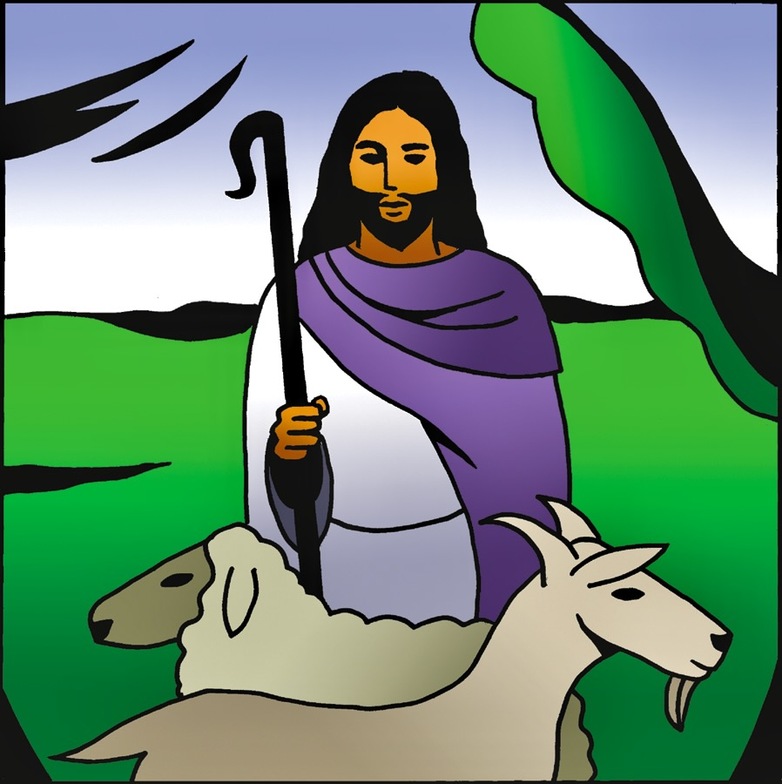
Christ the King Sunday
By Pr. Lisa Rygiel
This Sunday, Nov. 22, the church celebrates Christ the King Sunday. Christ the King Sunday is actually a relatively recent addition to the Christian liturgical calendar, even though the confession that Christ is King goes back to the New Testament itself. Its history is especially interesting because the feast was created in response to the political and social upheavals of the early twentieth century.
The feast was instituted by Pope Pius XI in his encyclical Quas Primas, issued Dec. 11, 1925. Europe had just experienced the devastation associated with World War I and its aftermath. Pius XI was particularly concerned about the growth of secularism and political ideologies that pushed Christian faith from public life. The U.S. Conference of Catholic Bishops describes the feast as a response to “growing secularism and hostility against the Church.”
Pius XI's central conviction was strikingly simple: He believed that lasting peace could not ultimately be secured merely through political systems; humanity needed what he called “the peace of Christ in the Kingdom of Christ.” In other words, when earthly governments and ideologies claim ultimate authority, Christians confess that ultimate authority belongs to Christ.
Pius XI emphasized that Christ's reign involves the whole person. Christ reigns in human minds because he is truth, in human wills through obedience to God's will, and in human hearts through love.
That becomes particularly important when Christ's kingship is read alongside the Gospels. Jesus does not look very much like the world's conventional image of a king. He:
- serves rather than demands service,
- associates with the poor and marginalized,
- forgives enemies,
- refuses to establish his kingdom through worldly domination,
- and ultimately reigns from the cross.
That creates one of the great theological tensions of Christ the King Sunday: Christ is proclaimed King, but his throne is a cross.
When Pius XI created the feast, he placed it on the last Sunday of October, immediately before All Saints' Day. In Quas Primas, he explicitly prescribed that date for its annual celebration.
That changed following the liturgical reforms associated with the Second Vatican Council. In the modern Roman Catholic calendar, the Solemnity of Our Lord Jesus Christ, King of the Universe is celebrated on the final Sunday of the liturgical year, immediately before Advent begins.
Although the modern feast originated in the Roman Catholic Church, Christ the King became part of the calendars of a number of other Christian traditions including the Lutheran tradition. In many Protestant churches it is called “Reign of Christ Sunday” rather than Christ the King Sunday. That language can emphasize the biblical concept of God's reign rather than worldly images of monarchy.
Christ the King Sunday – Nov. 22
Announcements
- Fellowship: Join us after worship Sunday for our coffee and conversation in the Fellowship Hall. As we make hygiene kits for the unhoused and others in need.
- Zion’s Book Club: Our Adult Study will take 2 weeks off and resume on Dec. 8 in the Fellowship Hall. We meet at 10:30 a.m. each Tuesday as we continue our discussion of the book, “What if Jesus was Serious about Prayer”.
- We’re Getting Ready for Thanksgiving: We are getting close to Thanksgiving Day, and our teams are busy preparing food for this special day, as we anticipate again this year serving almost 1,000. If you can support preparations, let please let Norine Hazen or the person listed below know. We have plenty of gravy but still need other side dishes including sweet potatoes (Cheryl Leef), potatoes (Sandy Cole), Cranberries (Lisa Rygiel), green beans (Mike McNeil), and Pies (Norine Hazen). We also need volunteers to help put things away and clean up. If you know someone who needs meals delivered, share that information with Jo Moss.
- Pie Day: At 1 p.m. on Wednesday, Nov. 25, we will be slicing pies, rolls, and cranberry cups. Food items and packaging will be provided; all we need is your help. If you have questions, please talk to Norine Hazen.
- Singing at the Legacy: The residents of The Legacy were delighted by our last sing along and have asked us to come and sing with them again. We have been scheduled for Nov. 22 at 1 p.m. Come along and sing with us!
- Santa Gift Tree for Seniors: First National Bank, Trinidad, again is sponsoring the senior citizen Letters to Santa Gift Tree. Requests of up to $25 may include utility bills, food, small gifts, or personal items. For many people, this is the only gift they will receive this season. For many years, Zion’s has supported this program and will do so again. We will have 12 to 15 gift letters available at worship on Sunday, Nov. 29. If you would like to help with this project, please let Jo Moss know.
- We’re Here for You: For pastoral care, Pr. Lisa has office hours from 9-10:30 a.m. on Tuesdays and by appointment. Call Zion’s at 719-846-7785 or send an email to zionsluth@gmail.com.
E-Formation
Are you a sheep or a goat? Lutherans believe that each of us is both saint and sinner, both sheep and goat. Come to worship this coming Sunday, the last Sunday of the church year, when we will praise Christ as the great judge who gathers us around his throne both now and at the end of time.
Matthew 25:31-46
This parable, which has no parallel in the other gospels, includes “all the nations” — Jewish terminology for non-Jews — in the eschatological end of all things. In a development of the gospel’s theme of the arrival of the kingdom of heaven, the parable uses the title King to refer to the Son of Man, the eschatological figure who during intertestamental times was described as bridging earth and heaven. In Palestine, sheep and goats were fed together. The imagery of eternal fire developed from consideration of Gehenna, the continuously burning garbage dump outside Jerusalem’s city walls. Matthew is clear that love of the neighbor is expected. Writing decades after the resurrection, Matthew attests that Christ is with us always (28:20). More surprisingly, he indicates that all peoples (“the nations”) have Christ in their midst.
Ezekiel 34:11-16, 20-24
Living during the sixth century bce, Ezekiel both condemned the sins of Jerusalem and Israel and of foreign nations and promised God’s restoration of a righteous kingdom. The oracle in chapter 34 uses pastoral imagery to describe Israel and its leaders, although it was by then an urban society. The metaphor of the king as a good shepherd was a commonplace image in the literature of the ancient Near East: an absolute monarch benefitted from the connection with historic herders. Ezekiel promises that God will restore what has become an idyllic memory, the monarchy of King David, who will serve God as a good shepherd.
Ephesians 1:15-23
Probably written in the late first century by a disciple of Paul, Ephesians is a general letter, rather than one aimed at a specific community, that praises the work of Christ who has saved us by grace and encourages the believers to live as children of light, as the one body of Christ. The passage calls believers saints, a term that grew in usage during the first century. The brilliant but dense passage describes the resurrection within three-tier universe: God has elevated the Lord Jesus Christ to be above all things, at the right hand of God. Paul’s metaphor of “body of Christ” is extended: Christ is the head, and all things are under his feet.
Zion's Lutheran Church
zionsluth@gmail.com
719-846-7785
-
Location
Office Hours
Contact
